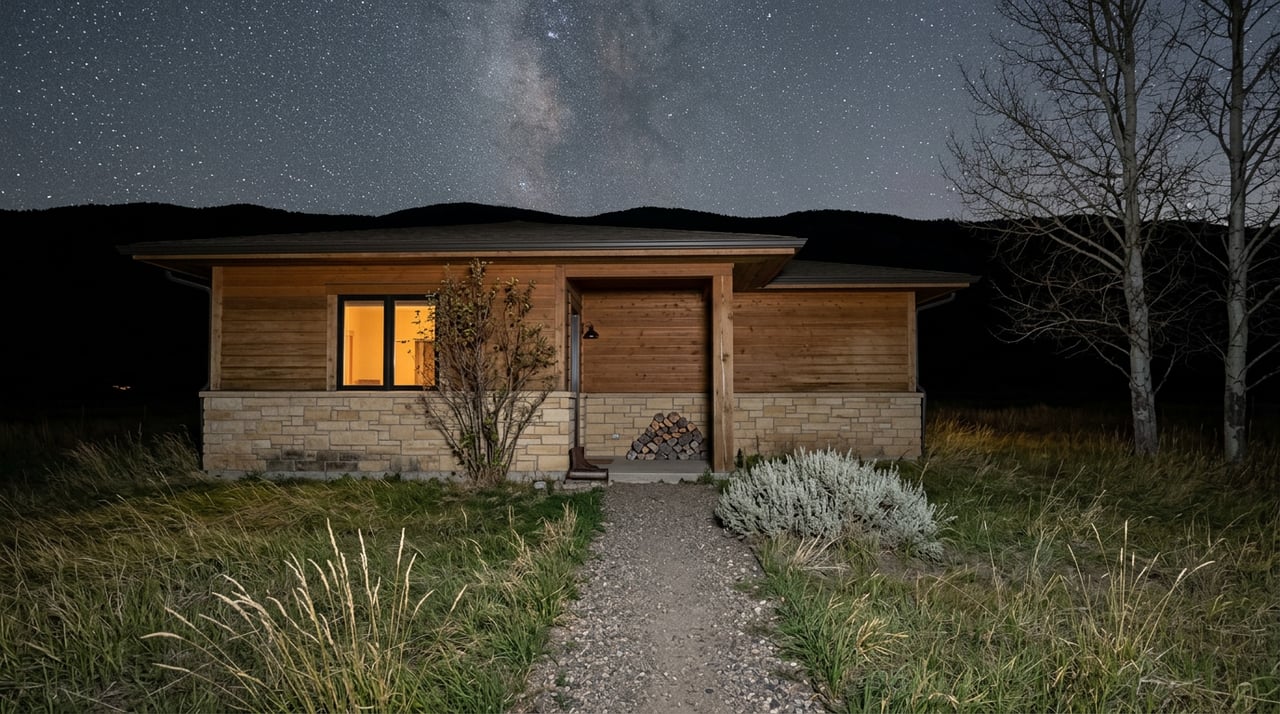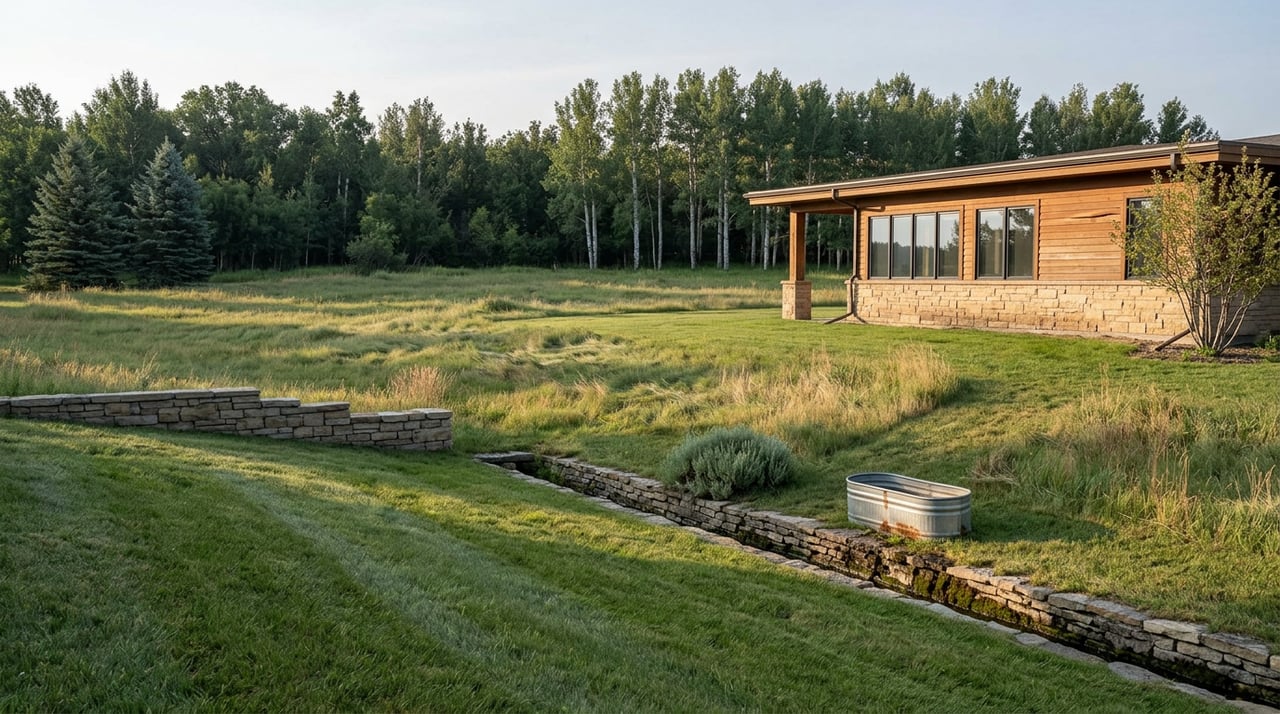
A buyer touring a four-acre property off Upper River Road last summer got the pitch every Woody Creek listing eventually delivers: river frontage, mountain views, room for horses, water rights included. It's the kind of line that closes deals because it sounds like the hard part is already handled. It isn't. In Woody Creek, where almost no home sits on municipal water, the phrase "water rights included" is the start of due diligence, not the end of it. The well permit attached to a property and the water right that permit represents are two different legal documents, and the gap between them is where Colorado real estate deals go sideways after closing, not before.
The permit is not the promise
Colorado does not recognize riparian rights. Owning land next to Woody Creek or the Roaring Fork River does not grant any legal claim to divert water from either one. What a landowner actually holds is either a well permit issued by the state's Division of Water Resources, or a decreed water right adjudicated through water court, and the two carry very different guarantees. A permit tells you what you're allowed to pump. It says nothing about whether the aquifer will still be producing at that rate five years from now, and it says nothing about whether your intended use, be that a pasture, a barn, or a pool, falls inside what the permit actually authorizes.
This distinction matters more in Woody Creek than almost anywhere else in the Roaring Fork Valley. The area is unincorporated, low-density, and built almost entirely on private wells rather than a public water system. Every ranch, every riverfront parcel, every acreage estate depends on a piece of paper filed with the state, and that paper comes in a handful of flavors that are easy to confuse and expensive to get wrong.
What "exempt" actually allows
Most residential wells in Pitkin County fall into a category called exempt, meaning they're outside the water rights priority system and don't require the augmentation plans that larger, non-exempt wells need. County water officials note that 62 percent of Pitkin County's existing wells fall into this exempt category. But exempt isn't one thing. It splits by acreage and by permitted use:
| Well type | Acreage threshold | What it legally supplies | Requires an augmentation plan |
|---|---|---|---|
| Household-use-only exempt | Any parcel under 35 acres | Indoor use in the primary dwelling only, no irrigation, no livestock | No |
| Domestic-use exempt | 35 acres or more | Household use plus up to one acre of lawn or garden and stock water | No |
| Non-exempt / decreed right | Any size, court-adjudicated | Whatever the decree specifies, potentially irrigation, agriculture, or multiple dwellings | Yes, when pumping could injure senior rights |
A five-acre parcel with a household-use-only well cannot legally water a garden or fill a trough for a single horse, no matter how green the pasture looks in the listing photos. A buyer who assumes the well covers the barn, the arena, or the hay field because the property is zoned for horses is making an assumption the permit itself does not support.
The number that shows how often this gap gets missed
Here's the part that turns this from a theoretical warning into a real pattern. Colorado's statewide average residential water use is 164 gallons per capita per day, according to the Colorado Water Conservation Board's 2023 figures. Pitkin County's own water analysis puts the county's average at 214 gallons per capita per day, roughly 30 percent higher. County water planners have flagged this gap directly, noting that it's unclear whether the larger homes common in Pitkin County, many of them served by household-only exempt wells, are actually staying within the terms of those permits, and that the ongoing construction of large homes on household-only wells could challenge future water reliability.
That's a polite way of saying a meaningful share of the valley's biggest homes are probably using more water than their well permits technically allow, and nobody is currently tracking it property by property. For a buyer, that's not an abstract policy problem. It's the property you're about to close on. If the seller's household-use-only well has quietly been irrigating a lawn or watering horses for a decade, that's a liability you inherit the day the deed transfers, not a grandfathered convenience.
This summer's drought turned the paperwork question urgent
None of this would carry much weight in a wet year. This isn't one. The Roaring Fork Conservancy's weekly monitoring showed the watershed running between 12 and 28 percent of normal flow as of late June 2026, and the region has been sitting in what the U.S. Drought Monitor classifies as exceptional drought, its most severe category, through the summer. The city of Aspen enacted Stage 3 water restrictions effective May 14, 2026, and reporting from the Colorado Sun in July described mountain water managers rationing reservoir releases based on community need rather than the usual first-come basis, because a large share of requests were coming from what one river district manager candidly called wealthy ranch owners rather than the public water systems the reserves were meant to protect.
Woody Creek's private wells sit outside city restrictions because they aren't on a municipal system, but a dropping water table doesn't respect that boundary. A well that produced 15 gallons a minute five years ago may not produce that today, and a buyer who skips a production test during due diligence is betting on numbers that may no longer hold.
What a well-documented sale actually looks like
Woody Creek doesn't transact often, but when it does, the water language on a listing tells you a lot. A four-acre property on Upper River Road closed in August 2025 at $4.43 million, and the listing specifically noted senior water rights supporting both household and agricultural use, on an equestrian-friendly parcel a short distance from the Woody Creek Tavern and the Roaring Fork River. That's meaningfully different language than "well water included." Senior water rights, adjudicated through Colorado's prior appropriation system, carry priority over junior claims in a shortage and can legally support uses, like irrigation and livestock, that a bare exempt permit cannot. The distinction was worth disclosing on the listing sheet because it was worth something to the buyer.
What to verify before your due diligence period closes
- Pull the well permit number through the Division of Water Resources and confirm the permitted use category matches your actual plans for the property, not just the acreage.
- Order a formal well production test rather than relying on historical pump records, especially after a season this dry.
- Ask whether the well is exempt or decreed, and if decreed, request the actual court decree rather than a summary.
- If any upgrade or new permit is needed, build in the current review timeline. The state's Division of Water Resources has been taking up to 49 days to process a complete residential well permit application in 2026, and various water-related fees rose 14 percent at the end of 2025.
- Confirm the ownership transfer paperwork gets filed with the state after closing. Well permits do not automatically follow the deed, and title companies typically handle this filing, but it's worth confirming rather than assuming.
None of these steps are exotic. They're the difference between owning a ranch and owning a ranch with the water to run it.
A few questions that come up often
Does every Woody Creek property need an augmentation plan? No. Most residential wells in the area are exempt and specifically excluded from that requirement. Augmentation plans generally apply to non-exempt wells whose pumping could affect senior water rights holders downstream.
If a property has "water rights," does that guarantee enough water for horses? Not automatically. A household-use-only exempt well, regardless of what marketing language calls it, cannot legally supply livestock. Only a domestic-use well on 35 or more acres, or a decreed right that specifically authorizes agricultural use, covers that.
Can this year's drought conditions affect a well that's outside city limits? Yes. Municipal restrictions don't apply to private wells, but a falling regional water table affects private wells too. A production test taken this season is more informative than one taken in a normal year.
Water diligence isn't the most exciting part of buying in Woody Creek, but it's the part that determines whether the property performs the way you expect it to once you actually own it. If you're evaluating a ranch or acreage property in Woody Creek and want a second set of eyes on what a listing's water language actually means before you're deep into a contract, reach out to Bruce Johnson at Douglas Elliman. Decades of local transactions here means knowing which questions to ask before the inspection period runs out, not after.