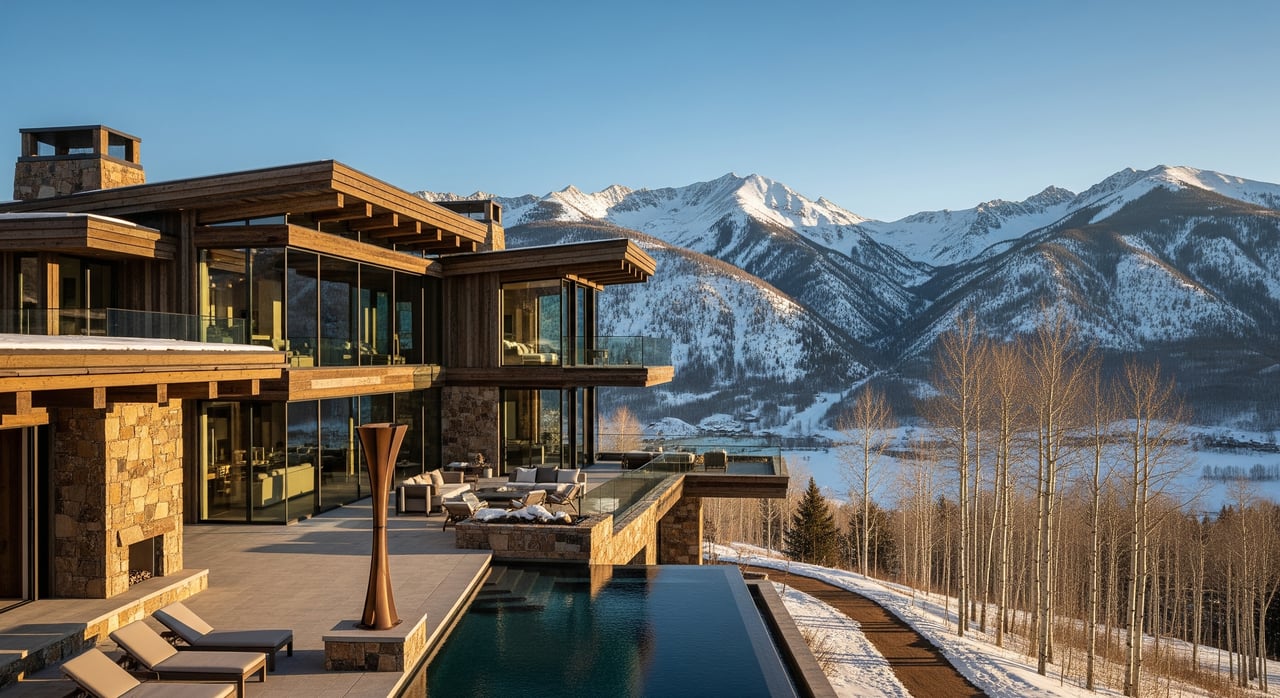
How do you price a one-of-a-kind Aspen estate when there are no true equals on the market? If you own a property with panoramic views, rare ski access, or significant acreage, you know that a simple price-per-foot approach falls short. You want to capture the full value of what makes your home special while moving at your pace and protecting privacy.
In this guide, you will learn the factors that command premiums in Aspen’s ultra-prime tier, how pricing works when comps are thin, and the strategies that protect value from first conversation through closing. You will also see how targeted distribution reaches qualified buyers without unnecessary exposure. Let’s dive in.
Aspen ultra-prime, at a glance
Ultra-prime in Aspen typically refers to the very top of the market. Think multi-million-dollar estates, singular sites, and turnkey ski access. Inventory is small, each property is unique, and many deals occur off-market. Direct comparisons can be limited or unreliable because the mix of views, access, acreage, and entitlements rarely repeats.
Buyers are usually ultra-high-net-worth, domestic or international. They value privacy, access to skiing and outdoors, and diversification. Many purchases are cash or privately financed. Sellers often prefer discretion. In this segment, the right pricing and distribution plan are as important as the number itself.
What drives price in Aspen
Views and view corridors
Protected, panoramic views of the valley or named peaks can be a dominant pricing driver. Orientation to sunrise or sunset, and legally protected sightlines, add confidence that the view you enjoy today will last. When possible, document any recorded view easements, low-density zoning on neighboring parcels, and the absence of buildable sites in key corridors.
What to gather:
- Topographic maps and recent surveys.
- Any recorded easements or municipal designations.
- Ownership and entitlement status of adjacent parcels.
Ski access and proximity
Not all ski access is equal. Buyers pay premiums for immediacy and certainty. True ski-in/ski-out or deeded access outranks a short walk, which typically outperforms a shuttle. If access relies on snow conditions or seasonal operations, clarity matters. Confirm and compile recorded easements or rights of way to support your price.
Privacy, security, exclusivity
Demonstrable privacy carries real value. Gated entries, long driveways, setbacks, topography, and mature vegetation all contribute. Security features, staff quarters, and on-site support areas add utility for UHNW owners. Quantify what you can: acreage, distances from neighbors, and boundary conditions. When available, note recent sales of properties with similar privacy profiles.
Acreage and development potential
Raw land value depends on buildable area, utilities, topography, and any conservation restrictions. Zoning, floor-area ratio, height limits, and potential for subdivision shape the highest and best use. Water rights and creek frontage can enhance appeal but add diligence steps. These factors also influence replacement-cost checks and your pricing floor.
Construction quality and amenities
Architecturally significant, recently built homes with high-end finishes command premiums. Signature amenities, such as indoor-outdoor entertaining spaces, wellness centers, collector’s garages, guest houses, and sustainability features, matter. For unique improvements, local builder estimates help validate replacement cost and support your price, especially when the home is newer and well documented.
Access, utilities, wildfire risk
Year-round road access, proximity to Aspen’s core and services, and municipal utilities can ease buyer concerns. Wildfire risk is closely watched. Defensible space, firewise compliance, and current insurance options influence acceptance and price. Be ready to show mitigation work and insurance quotes.
Pricing when comps are scarce
When direct comps are thin, a blended approach is standard. The goal is to set a defensible pricing band supported by evidence and buyer behavior, not a single point that overreaches or leaves money on the table.
Market approach with adjustments
Start with the closest sales, including verified off-market transactions. Adjust for views, access, acreage, entitlements, age, and amenities. In this tier, adjustments can be large and subjective. A clear narrative that explains each adjustment builds confidence. Document the source of any off-market sale you rely on, such as broker verification and recorded deed data.
Cost and replacement checks
Estimate land value, then add today’s replacement cost for improvements, less depreciation. This does not capture lifestyle or exclusivity, but it helps set a floor and validate pricing for high-quality, recent builds. Local contractor input and permit histories can strengthen the case.
Income view, when relevant
If the estate has a rental history or includes multiple dwellings, an income approach may provide another lens. In Aspen’s ultra-prime band, buyer utility often outweighs yield, so this method is typically a complement, not a driver.
Hybrid, buyer-validated pricing
Combine the best available comps, replacement cost, and a measured premium for the unique attributes you can document. Pre-market outreach to qualified buyers and opinion letters can test a pricing band before a full launch. This feedback loop helps calibrate your anchor price and negotiation range.
Data that support valuation
The strongest pricing packages include:
- Recorded deeds, sale histories, and parcel data.
- Broker-verified off-market summaries, when available.
- Builder quotes for replacement cost.
- Zoning and entitlement records that define potential.
- Cross-checks from other top ski markets when local comps are absent.
Off-market or public listing
There is no one-size-fits-all path. Off-market exposure protects privacy, curates showings, and can preserve price by avoiding public underpricing signals. The tradeoff is reduced price discovery and the risk of missing a competitive bidder. A public listing maximizes exposure and can create competitive tension, but it invites broader attention.
A common solution is a hybrid: begin with a discreet, time-bound exclusive to test a defined pricing band with qualified buyers, then move to a public launch if needed. Your choice should reflect your privacy priorities, timing, and the property’s uniqueness.
Tactics that protect value
- Calibrate your anchor. Set a list price within a documented valuation band and allow an appropriate margin for negotiation. Avoid fishing far above what the evidence can support.
- Stage the release. Use tailored materials, broker previews, and controlled data rooms. Sequencing can create urgency among qualified buyers without overexposing the asset.
- Qualify every showing. Require proof of funds or pre-approval and use NDAs for sensitive disclosures. Fewer, better showings protect your time on market and reduce speculative offers.
- Manage offers with intent. If demand concentrates, set a best-and-final timeline. If privacy is paramount, negotiate privately with the strongest prospects.
- Structure clean terms. Favor certainty with escrow clarity, realistic timelines, and focused contingencies. Skilled negotiation keeps price and terms aligned to your goals.
Appraisals and financing
In a market with scarce comps, lender appraisals can be conservative. Many buyers at this level pay cash or use private lenders. If financed buyers are in the mix, prepare a comprehensive appraisal support file that includes comparable sales, replacement-cost estimates, and a thorough property attribute packet. Consider appraisal contingencies and bridge structures where appropriate.
Legal and tax diligence
Ultra-prime deals often hinge on documentation. Resolve title issues early and compile recorded easements, view and access rights, conservation restrictions, and any covenants. If applicable, gather water rights records and ditch agreements. For cross-border parties, expect specialized tax guidance. On wildfire and insurance, summarize mitigation work and current coverage options to reassure buyers.
Pre-listing preparation checklist
Assemble a complete, well organized dossier. It speeds diligence and strengthens your negotiating stance.
- Parcel and deed history.
- Zoning, permitted uses, FAR, and height allowances.
- Recorded easements, rights of way, and any CC&Rs.
- Current survey and topographic map.
- Water rights and any consumptive use documentation.
- Construction documents, permits, certificates of occupancy, and warranties.
- Recent capital improvements with invoices.
- Inventory of amenities, finishes, and inclusions or exclusions.
- Insurance information and wildfire mitigation reports.
- Rental history and operating statements, if relevant.
- Summaries of recent verified off-market sales.
- High-quality photos, video, drone, and floor plans.
Why the right broker matters
In Aspen’s ultra-prime band, the combination of precise valuation, skilled negotiation, and targeted distribution protects your price. An experienced local broker draws on off-market intelligence, replacement-cost inputs, zoning insight, and direct buyer feedback to set a defensible pricing band. During negotiations, they qualify buyers, shape clean offers, and use competitive processes when appropriate. On distribution, a large luxury network reaches the small pool of UHNW buyers who value uniqueness and discretion.
You deserve guidance that is both high-touch and far-reaching. If you are considering a sale, or simply want a confidential pricing opinion, connect with Bruce Johnson with Douglas Elliman Aspen-Snowmass for a private consultation.
FAQs
How do you price an Aspen estate with no direct comps?
- Use a blended approach that combines the best available comparables, replacement-cost checks, and documented buyer preferences, then present a pricing band with sensitivity.
How much does ski access add to value?
- Immediate, deeded, and exclusive access can command a significant premium, but the increment depends on certainty and proximity. Documentation of access rights is essential.
Should I list publicly or keep my sale private?
- It depends on your priorities. Public listings maximize exposure and price discovery. Off-market strategies preserve privacy and curate showings. Many sellers use a hybrid path.
Will a lender appraisal undercut my price?
- It can. Appraisers may be conservative when comps are scarce. Cash buyers, private lenders, and broker-driven validation can help bridge the gap.
What are common dealbreakers in Aspen’s ultra-prime tier?
- Unresolved title or easement issues, uncertain ski access, significant wildfire exposure without mitigation, unclear water rights, and entitlements that block desired expansion.
How long does it take to sell at this level?
- Timelines vary widely. Well-priced, unique estates can trade quickly through broker networks. Others take months or longer as sellers test the market and wait for the right buyer.